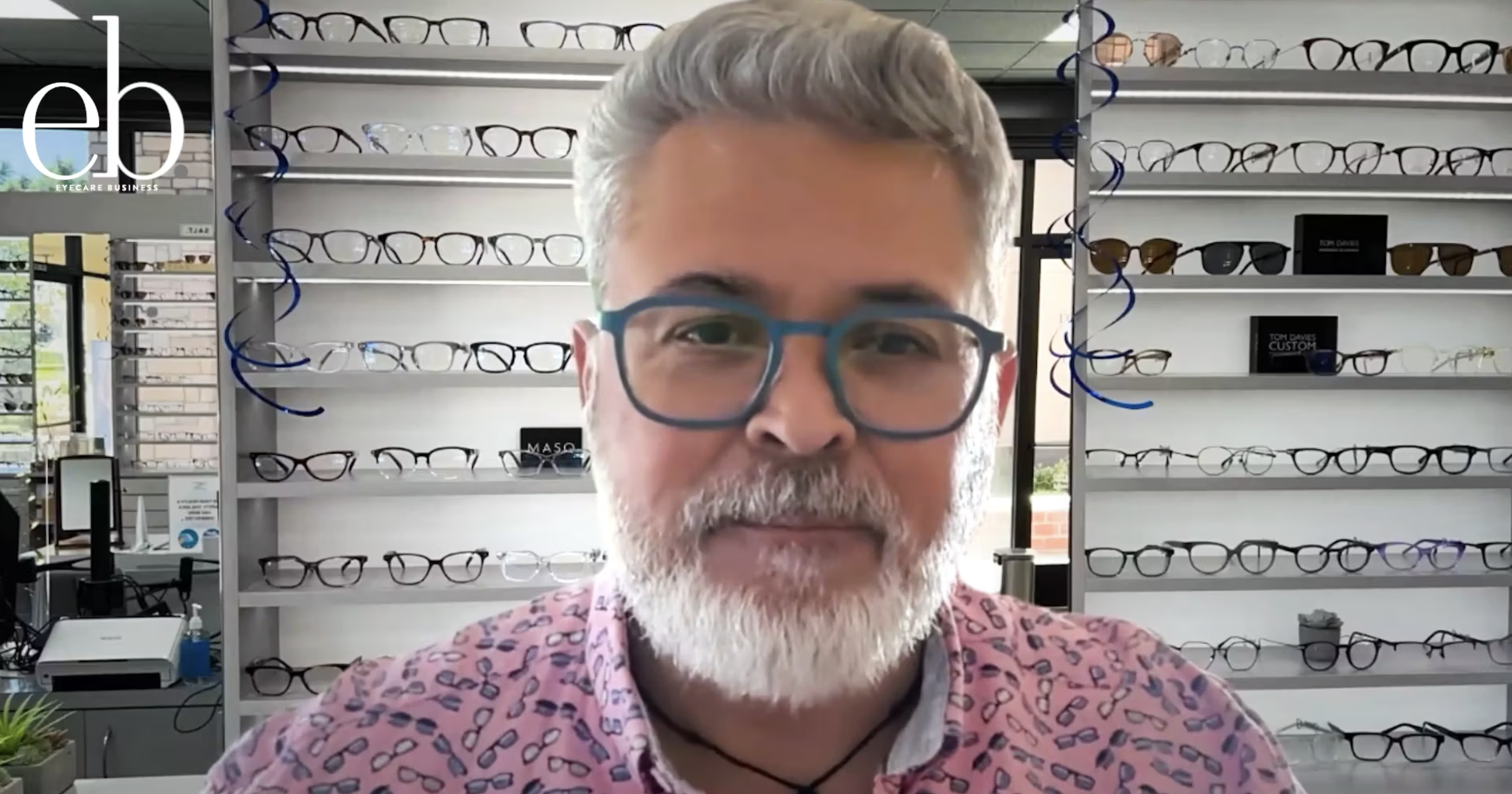


Eyecare Business connects with Jonathan Fabriziani, OD, owner of Fab Eye Care in Phoenixville, Pennsylvania, for The Inside View—a video series dedicated to exploring overarching conversations taking place across the eyecare industry. Here, he shares his perspective on knowing when a practice is ready to expand and why emerging doctors should seek mentorship and a clear ownership path before launching into independent practice.
The transcript below has been lightly edited for clarity.
I'm Jonathan Fabriziani, owner of Fab Eye Care with my brother and my dad. We’re a 2-location private practice that practices full scope optometry, and we also have 2 ophthalmologists who come in to do our surgical cases. Both offices have been in business for more than 40 years. One started by Dr. Barry Fabriziani, my dad, and Dr. Charles Griffin, a friend of ours. We were able to transition the practice.
EB: At what point does a single-location practice know it’s ready to expand?
A lot of it has to do with your first location's financial status. What are the margins? Do you have a good net cash flow? And the biggest thing for me is having a low-debt schedule because, like we've seen in past years with COVID-19 and the United Health Care cyberattack, is that you can't predict when things are going to go wrong—but you can control your debt. You can control your margins for cost of goods and make sure that you have a healthy cash flow. [You can control whether you] have a good base before you consider taking on more risk with a second location, or anything new. Anytime your cost of doing business grows—from payroll, insurance, or rent—you're taking on more risk. So limiting that debt and having a good, healthy cash flow with your first practice is absolutely essential before taking on a second location.
A lot of people ask me about the processes and making sure that everything is organized. No one's ever going to be fully ready for that second location because you haven't done it before—but that can all be learned as long as you have a good work ethic and you're willing to put in the effort. That can all be tweaked and fixed. Nothing's going to go perfectly. But if you get yourself into a situation where you're taking on too much risk or taking on too much debt, that is going to distract you from doing a good job with that second practice. It is just going to add to the difficulties of running 2 offices. So I think having a really healthy net on your first practice, a good savings, a good cash flow—that's when you're really ready to go to that second location and take on more risk.
EB: What message would you share with practitioners considering independent practice ownership?
A lot of colleagues ask me, “How did you know that private practice vs other modalities was the right fit for you?” And I tell them that I didn't know. My advice to my colleagues, especially emerging doctors, is to go into your community or somewhere where you want to live and find some older docs. Talk to them about a potential associate position where you can buy-in after 2 to 3 years, to have that option, so that you can get to know the practice, get to know your patients, and see if it's a good fit.
It is often mutually beneficial for the doctor to bring on someone younger who's going to bring some energy, and then you can learn from that doctor. But you also get to see what an eyecare practitioner goes through to run a private practice and make sure it’s something that you want to do.
The only thing that I would say is make sure you have a plan: For example, after 3 years, I have an option to buy out at this number. A lot of young docs go into these practices and grow the practice, and then they end up having to pay for that growth, for all that hard work that they did. So have a plan going into it. But I think someone who has never had any experience with private practice, who wants to just open cold or buy out new without having any experience in that practice or in that area, can be very distracted from seeing patients, doing a good job being a doctor, because you're dealing with so much else.
I would look for practices where the older doc has limited their schedule, who isn't buying the new machines anymore, so you can go in with that added value. Because there's so much value in their experience: They know the patients, they know the community, they've seen a lot of things come through their office, and have dealt with a lot of issues.
One major advantage you have is there's a lot of boomers who are out there who are looking for young docs to come in and re-energize their practice. Not every practice is fit for private equity. And actually, the practices that are not, I would target because that's where there’s room for growth.
Other Videos From Series