

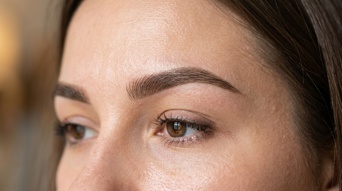
The adoption of medical ocular aesthetics procedures into the optometry setting is being driven by both patient interest and business necessity. While many patients like the convenience and comfort of getting these services like fillers, treatment for ocular rosacea, or lash and brow treatments from their eyecare professional in a medical setting, optometrists are leaning into the offerings to create new revenue streams that can offset lower vision-plan reimbursements and competition from online retailers.
But offering both medically necessary visual procedures (at least partially covered by insurance) and noncovered elective procedures under 1 roof, often even on the same day, can make talking about payment feel complicated to both the practitioner and the patient.
Offering financing options to these patients removes a lot of the complexity, says Jean Moody, vice president at Synchrony, which operates CareCredit. Although there’s often a propensity among eyecare providers and their staff to selectively mention financing based on preconceived notions, like age or the amount being spent, Moody says that making it part of the conversation with all patients and all procedures simplifies the process.
Breaking the Silence on Financing
“We don’t want patients to limit their desire to move forward with treatment—medical or cosmetic—because flexible payment options were never mentioned,” says Moody. “Staff should be trained at every patient touchpoint to mention this is an option.”
She advises to keep team messaging simple and straight-
forward, with a script like: “Financing is offered for all of our patients. Prequalification takes less than a minute.”
Bring up the availability of financing first when patients check in, so they can already be in the mindset that they have options to spend more. Moody says that bringing up financing could be the difference between a patient choosing 2 frames instead of 1, or deciding whether to book some filler appointments that same day or simply hold off.
“Consumers want the option to break up the cost into payments and by not offering that, you limit your practice from potential opportunities,” Moody adds. “Most patients make decisions based on what they’re prepared to spend that day.”
Medical spas are already very comfortable offering financing options, and if optometrists want to move into this space, it will benefit them to adopt a comparable approach, she notes. The disconnect often has more to do with optometrists and staff being uncomfortable talking about payment than it does patient hesitation. She says medical spas view financing as a tool that will help them grow their business by allowing more patients to say ‘Yes.’ She says optometrists should adopt a similar mindset.
Opportunity for Growth
Moving into the ocular aesthetics market by offering some of these services could be a wise business move. According to a report by Grand View Research, the global noninvasive medical aesthetics market is projected to grow from $38.7 billion in 2026 to $64.1 billion by 2033.1 But optometrists could hinder their success if they fail to embrace offering financing options.
“Optometrists are very good at taking on more specialty care, but that’s going to cost patients more money, and they need to get better about these financial conversations,” Moody sums up. “I hate to see optometrists investing in new technologies and learning new skills but not getting the ROI they expected because they aren’t good at talking about how to make it financially accessible to patients.”
Reference:
- Medical Devices Research Team. Non-invasive aesthetic treatment market (2026-2033): size, share & trends analysis report by procedure, by end use, by region, and segment forecasts. Grand View Research. Updated June 2026. Accessed September 14, 2026. https://www.grandviewresearch.com/industry-analysis/non-invasive-aesthetic-treatment-market
Sponsored by

The information, opinions, and recommendations expressed in the article are for informational purposes only. Information has been obtained from sources generally believed to be reliable. However, because of the possibility of human or mechanical error by our sources, or any other, Synchrony and any of its affiliates, including CareCredit, (collectively, “Synchrony”) does not provide any warranty as to the accuracy, adequacy, or completeness of any information for its intended purpose or any results obtained from the use of such information. The data presented in the article was current as of the time of writing. Please consult with your individual advisors with respect to any information presented.